In short
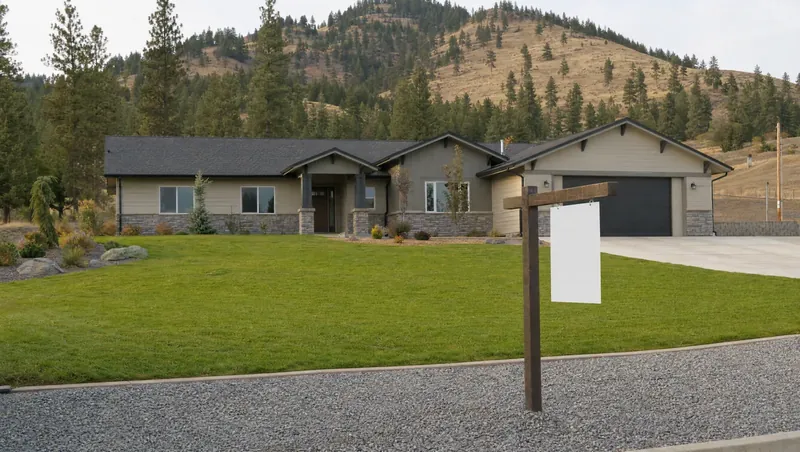
AB-38 requires anyone selling a home in a California High or Very High Fire Hazard Severity Zone to give the buyer documentation that the property meets defensible space rules, plus (for homes built before 2010) a disclosure of fire-hardening features and known wildfire-vulnerable materials. In practice that documentation comes from a defensible space inspection — commonly called an AB-38 inspection — requested from your local fire agency or CAL FIRE before escrow closes. It's a paperwork and inspection requirement, not a new construction code.
Two things the seller hands the buyer
Selling a home in a High or Very High Fire Hazard Severity Zone
Defensible space compliance documentation
Civil Code 1102.19
Comes from a defensible space inspection
Wildfire vulnerability disclosure
Civil Code 1102.6f
Six vulnerable features, if present and known
Who inspects
There is no single statewide AB-38 inspection office — it depends on where the property sits.
- Local agency
- Local ordinance in place Local agency
- No local ordinance CAL FIRE Request at fire.ca.gov/dspace · you get form LE-100a
In the LRA the trigger varies by county — confirm with your local fire agency.
From listing to inspection
- Request it when you list As soon as the home goes on the market Seller or seller's agent only · no escrow needed
- Agency makes contact Up to two weeks El Dorado County · Napa County aims for 72 hours
- Inspection visit Roughly 30 minutes on site Orange County Fire Authority · form emailed within 1–3 business days
Pass
Up to six months The compliant report stays validFail — two ways forward
- Fix and get re-inspected Napa County allows 14 calendar days The cleaner path
- Written agreement: the buyer takes it on One year after close of escrow where no local ordinance exists180 days in El Dorado County, under its ordinance
The six-month clock
Local ordinance in place? The six-month window does not apply — the ordinance's own rules do.
What it costs: no statewide fee
Each agency sets its own rate. Examples as of 2026:
In LA County, a home that passed its annual inspection within six months of closing can use it for AB-38.
Home built before 2010? Disclose these six if you know of them
- Vents with openings over 1/8 inchEave, soffit and roof vents · or not flame and ember resistant
- Untreated wood shingles or shakesRoof covering
- Combustible landscaping within 5 feetAnd under the footprint of an attached deck
- Single-pane or nontempered glassWindows
- Loose or missing bird stopping or roof flashingRoof
- Rain gutters without noncombustible coversMetal or noncombustible gutter covers
On and after July 1, 2025 the same disclosure also lists the State Fire Marshal's low-cost retrofits — and which ones you've completed.
CAL FIRE list, updated January 1, 2026. Done any already? You get to say so, in writing, to every buyer.
What took effect when
- 2019 AB-38 adds two sections to the Civil Code
- January 1, 2021 Vulnerability disclosure takes effect Civil Code 1102.6f
- July 1, 2021 Defensible space documentation takes effect Civil Code 1102.19
- July 1, 2025 Low-cost retrofit list joins the disclosure
- October 13, 2025 AB 1455 rewrites both statutes and writes Zone 0 into PRC 4291
- August 19, 2026 Board of Forestry approves Zone 0 regulations
- September 8, 2026 Zone 0 package withdrawn from Office of Administrative Law review
- No effective date Zone 0 is not part of what an AB-38 inspection checks Not law yet
Who AB-38 applies to
AB-38 (2019) added two sections to the Civil Code that apply specifically to homes in a state-mapped High or Very High Fire Hazard Severity Zone (FHSZ):
- Defensible space compliance documentation ( Civil Code §1102.19, effective July 1, 2021) applies to any residential sale in a High or Very High FHSZ, regardless of the home's age.
- Wildfire vulnerability / home hardening disclosure ( Civil Code §1102.6f, effective January 1, 2021) applies only to homes built before January 1, 2010 in one of those zones — the cutoff is meant to catch homes built before California's Wildland-Urban Interface building code took effect.
Both run through the standard California real estate transfer disclosure process, so they land on the seller's desk (or the listing agent's) at the same time as the rest of the Natural Hazard Disclosure statement.
The two disclosures, in plain terms
1. Home hardening / vulnerability disclosure
For pre-2010 homes, the seller must tell the buyer the property predates wildfire-urban-interface construction standards and point them to readyforwildfire.org for hardening information. If the seller is aware of any of the following vulnerable features, they must disclose them:
- Eave, soffit and roof ventilation with openings larger than 1/8 inch, or vents that are not flame and ember resistant
- Roof coverings made of untreated wood shingles or shakes
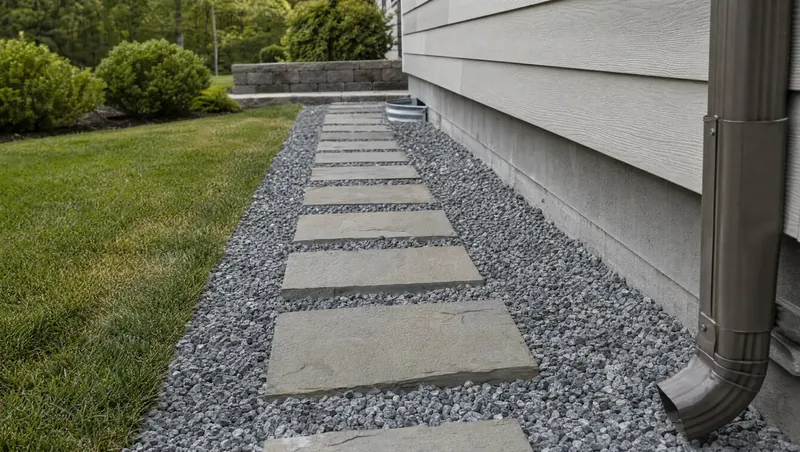
- Combustible landscaping or other materials within 5 feet of the home and under the footprint of any attached deck
- Single-pane or nontempered glass windows
- Loose or missing bird stopping or roof flashing
- Rain gutters without metal or noncombustible gutter covers
That is the complete statutory list — six items, no more. If the seller has already obtained a final inspection report under Government Code §51182, they must also give the buyer a copy of that report or information on where to obtain one.
On and after July 1, 2025 — a delayed provision of the 2020 amendment, not a new law — the same disclosure must also include the State Fire Marshal's list of low-cost retrofits (developed under Government Code §51189) and state which of those retrofits, if any, have been completed during the seller's ownership. The current CAL FIRE list, updated January 1, 2026, runs 12 structure-hardening items (Class A roof at replacement time, a 3/8–1/2 inch metal spark arrestor on chimney and stovepipe outlets, 6-inch metal flashing at the deck-to-wall intersection, and so on) plus 8 defensible space items. This is the piece that turns a compliance checkbox into a marketing asset: a seller who's already vented under eaves or swapped in ember-resistant materials gets to say so, in writing, to every buyer.
2. Defensible space compliance documentation
Separately, under Civil Code §1102.19, the seller must give the buyer documentation that the property complies with defensible space law — either the local vegetation management ordinance where one exists, or the state standard under Government Code §51182 / Public Resources Code §4291 (the 100-foot defensible space law).
Both statutes were rewritten by AB 1455 in 2025, effective October 13, 2025. AB 1455 wrote an ember-resistant “Zone 0” for the first 5 feet into PRC 4291, but only “based on regulations promulgated by the board”. The full Board of Forestry and Fire Protection approved those regulations on August 19, 2026, but they are not law. The adopted package went to the Office of Administrative Law as an emergency rulemaking (file 2026-0828-03E) — AB 1455's expedited path — and was withdrawn from that review on September 8, 2026. It has not been resubmitted, so there is no effective date. Under the package as approved, existing structures would have phased in over three to five years — the Board's notice gives existing structures three years from the effective date for items such as small flammable vegetative materials, the area under decks, firewood storage and tree maintenance, and “within three years … or within five years on a timeline set by the local agency responsible for fire protection” for the safety zone, vegetation maintenance, fence and gate, and outbuilding requirements — while new construction would have had to comply on the effective date. Until some version of the rule actually takes effect, Zone 0 is not part of what an AB-38 inspection checks.
AB 1455 also lets a local agency adopt an ordinance authorizing alternative defensible space practices, and a property owner following those alternative practices is not deemed in violation of Government Code §51182. That is why the document that counts as “compliance” differs from county to county.
How compliance documentation actually works
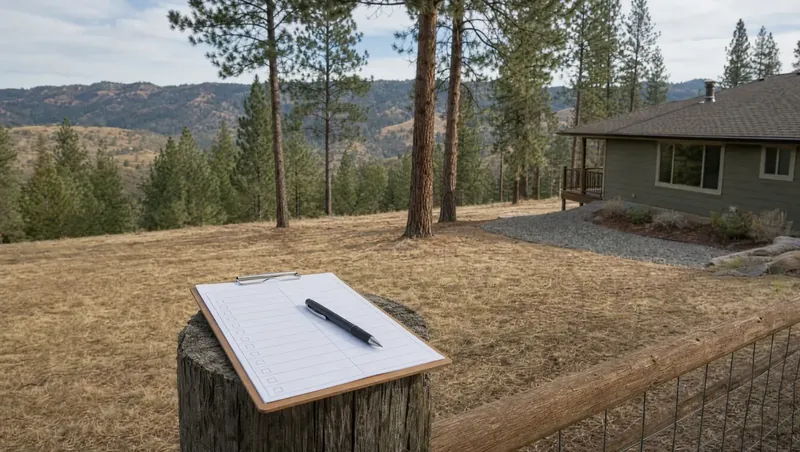
In practice this comes down to getting a defensible space inspection from whichever local agency handles it — a city or county fire department, a fire protection district, or CAL FIRE where the property sits in a State Responsibility Area. The inspector checks the property against the applicable defensible space standard and issues documentation showing pass, fail, or corrections needed — in State Responsibility Area properties without a local ordinance, that document is CAL FIRE's Notice of Defensible Space Inspection, form LE-100a.
How current that documentation has to be depends entirely on whether your jurisdiction has its own ordinance:
- Local ordinance in place. The seller provides documentation “that complies with the requirements of that local ordinance,” plus information on the agency it can be obtained from. The statutory six-month window does not apply — the ordinance's own rules do.
- No local ordinance. The seller provides documentation obtained “in the six-month period preceding the date the seller enters into a transaction to sell” the property. Note that the clock runs from entering the transaction, not from the close of escrow.
If the seller doesn't have compliant documentation and closing is approaching, the law provides a fallback: buyer and seller sign a written agreement transferring the obligation to the buyer. Where a local ordinance exists, the buyer must comply with that ordinance — El Dorado County, for instance, requires compliance within 180 days after close of escrow. Only where no ordinance exists does the statute give the buyer one year from the close of escrow.
Nothing in AB-38 changes the underlying legal duty to maintain defensible space itself — that duty exists independent of any sale under PRC 4291 and Gov. Code 51182, and local agencies keep full authority to enforce it.
Who inspects, exactly
There is no single statewide AB-38 inspection office. The State Fire Marshal's Information Bulletin 21-007, written specifically for real estate transactions, sorts it into three cases:
- Very High FHSZ in the Local Responsibility Area (LRA) — the seller requests a defensible space compliance inspection from the local agency.
- High or Very High FHSZ in the State Responsibility Area (SRA), local ordinance in place — the seller requests the inspection from the local agency.
- High or Very High FHSZ in the SRA, no local ordinance — the seller requests it from CAL FIRE using the inspection request feature at fire.ca.gov/dspace.
In the SRA an inspection is required in both the High and the Very High zone, not just Very High. Check which zone a property falls in on CAL FIRE's Fire Hazard Severity Zone map. In the LRA the trigger varies by county — El Dorado County, for example, requires an inspection for LRA parcels designated High or Very High, while Los Angeles County's program covers only Very High in the LRA — so confirm with your local fire agency rather than assuming.
The CAL FIRE request itself is an online “Real Estate Defensible Space Inspection” form (a Survey123 application built to support the requirements in AB-38). You get a confirmation email after submitting, then a follow-up phone call or email from your local defensible space inspector to schedule the visit. If the property fails on the first attempt, the inspector explains what work is needed and schedules another appointment.
In the SRA with no local vegetation management ordinance, the document that satisfies AB-38 is the Notice of Defensible Space Inspection (form LE-100a), supplied by CAL FIRE as a hard copy or PDF. Checked boxes on that form are violations, and failing to correct them can result in a citation and fine independent of the sale. One limit worth knowing: for PRC 4291 purposes the inspection ends at the property line — the inspector will not fault you for the neighbor's brush. For the item-by-item list of what the inspector looks at, see our guide to what a defensible space inspection checks.
What an AB-38 inspection costs
There is no statewide AB-38 inspection fee, and no way to quote one number: the inspecting agency sets the price. El Dorado County puts it plainly — “Some agencies charge a fee while others do not, and each agency sets its own rate”, and if a fee applies the inspecting agency sends payment instructions. Examples as of 2026:
- Napa County — no cost for the inspection.
- Orange County Fire Authority — no cost; roughly 30 minutes on site, compliance form emailed within 1–3 business days.
- Permit Sonoma — inspection by the Fire Prevention Division is available for a fee.
Los Angeles County is the one number people quote wrongly. The $151 fee held flat for 2026 is the county's annual defensible space inspection fee for declared parcels, not the price of an AB-38 inspection. It matters for sellers only because a home that passed its annual inspection within six months of closing can use that inspection to satisfy the AB-38 requirement. The same county program assesses a $500 administrative fine plus a $1,647 abatement enforcement fee on parcels still non-compliant after a second inspection.
How long it takes, and how long the report stays valid
Request the inspection when you plan to list, not when escrow opens. El Dorado County advises sellers to request it as soon as the home goes on the market and to allow up to two weeks for the inspecting agency to receive the request and make contact; only the seller or the seller's agent may request the inspection, and the home does not have to be in escrow for it to happen. Napa County aims to make contact within 72 hours of a request. Once passed, a compliant report is valid for up to six months — El Dorado states this explicitly, and Sonoma County treats an assessment done within the prior six months of the sale as valid.
If the property fails, there are two ways forward. Do the work and get re-inspected before escrow closes — Napa County allows 14 calendar days to correct the items found — or sign the written agreement moving the obligation to the buyer, who then has one year after close of escrow where no local ordinance exists, or whatever the local ordinance sets where one does (180 days in El Dorado County). Re-inspection before close is the cleaner path: it keeps the deal free of an open compliance obligation.
Before booking, the Ready for Wildfire defensible space self-assessment is worth an hour. It flags the same zone-by-zone issues a real inspector checks — dead vegetation touching the structure, fuel ladders from ground to canopy, wood piles or debris within 5 feet — and catching them yourself saves a failed-inspection round trip.
What typically fails inspection, and where contractors fit in
The most common fail points are within the closest zones: vegetation or combustible mulch touching the house or attached structures, tree limbs overhanging the roof or within 10 feet of the chimney, dead or dying plants anywhere in the 0–30 ft zones, and dense unbroken brush or "fuel ladders" continuing into the 30–100 ft zone. Roofing, venting and window issues flagged in the hardening disclosure are separate from the defensible space inspection but often get raised in the same escrow conversation.
This is standard defensible space clearing and home hardening retrofit work — vegetation removal and spacing, vent screening, gutter and eave cleanup — the kind the contractors in this directory do routinely for pre-sale compliance, not a specialized trade of its own.
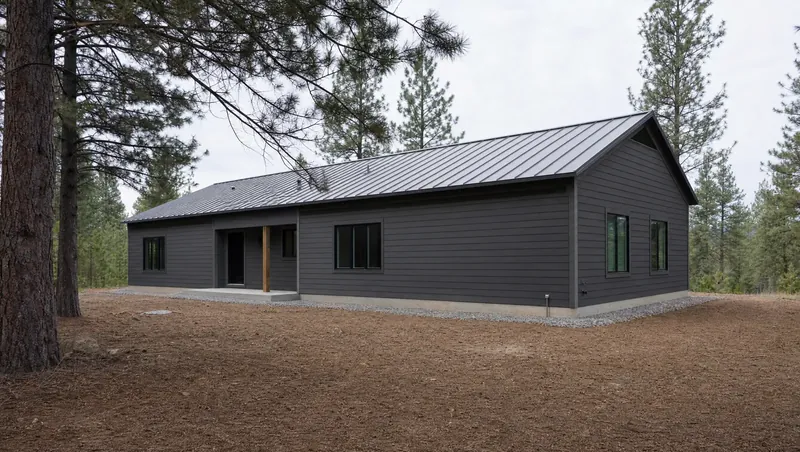
If you're doing the work anyway before listing, it's worth looking at IBHS Wildfire Prepared Home certification at the same time. It's voluntary and separate from AB-38, but it covers much of the same ground and is recognized by insurers — which turns pre-sale clearance work into something a buyer's insurance quote can actually reflect.
What happens if a seller skips it
AB-38's documentation and disclosure duties sit inside the same Civil Code framework as other real estate transfer disclosures, so incomplete or inaccurate disclosure exposes a seller to the same kind of post-sale liability as any other undisclosed material defect — separate from, and in addition to, the underlying legal duty to maintain defensible space, which local agencies enforce on their own timeline regardless of whether a sale is happening.
FAQ
6
Does AB-38 apply to every home sale in California?
No. It applies to residential property sales where the home is located in a state-mapped High or Very High Fire Hazard Severity Zone. The wildfire-vulnerability disclosure (Civil Code 1102.6f) only applies to homes built before January 1, 2010; the defensible space compliance documentation (Civil Code 1102.19) applies regardless of the home's age.
What happens if I can’t get an inspection before closing?
Seller and buyer sign a written agreement under which the buyer takes on the obligation. Where the local jurisdiction has enacted a defensible space or vegetation management ordinance, the buyer must comply with that ordinance — El Dorado County, for example, gives the buyer 180 days after close of escrow, not a year. Only where no local ordinance exists does Civil Code 1102.19 give the buyer one year from the close of escrow.
Who inspects for AB-38 compliance?
It depends on where the property sits. In a Very High zone in the Local Responsibility Area, and anywhere in the State Responsibility Area that has a local defensible space or vegetation management ordinance, the seller requests the inspection from the local agency. In the State Responsibility Area with no such ordinance, the seller requests it from CAL FIRE through the inspection request form at fire.ca.gov/dspace. There is no single statewide AB-38 inspection office.
How much does an AB-38 inspection cost?
There is no statewide fee. As El Dorado County puts it, some agencies charge a fee while others do not, and each agency sets its own rate. Napa County and Orange County Fire Authority run the inspection at no cost; Permit Sonoma charges a fee. In Los Angeles County the $151 charge is the annual defensible space inspection fee for declared parcels rather than an AB-38 price — but a passing annual inspection within six months of closing satisfies the AB-38 requirement.
How long is a defensible space inspection report valid?
Six months, where no local ordinance sets its own rule: Civil Code 1102.19 requires documentation obtained in the six-month period preceding the date the seller enters into a transaction to sell. El Dorado County states a compliant report is valid for up to six months, and Sonoma County treats an assessment done within the prior six months as valid. Where a local ordinance exists, that ordinance governs.
Do I have to disclose a wood shingle roof or single-pane windows?
Yes, if the home was built before 2010 and is in a High or Very High FHSZ. Civil Code 1102.6f lists specific vulnerable features — including untreated wood shingle/shake roofing, vents with openings over one-eighth inch, single-pane or nontempered windows, loose or missing bird stopping and roof flashing, rain gutters without noncombustible covers, and combustible landscaping within 5 feet — that sellers must disclose if present and known.
Sources 18
- Civil Code §1102.19 leginfo.legislature.ca.gov
- Civil Code §1102.6f leginfo.legislature.ca.gov
- Government Code §51189 leginfo.legislature.ca.gov
- current CAL FIRE list, updated January 1, 2026 34c031f8-c9fd-4018-8c5a-4159cdff6b0d-cdn-endpoint.azureedge.net
- Government Code §51182 leginfo.legislature.ca.gov
- Public Resources Code §4291 leginfo.legislature.ca.gov
- approved those regulations on August 19, 2026 bof.fire.ca.gov
- Office of Administrative Law oal.ca.gov
- Information Bulletin 21-007 34c031f8-c9fd-4018-8c5a-4159cdff6b0d-cdn-endpoint.azureedge.net
- fire.ca.gov/dspace fire.ca.gov
- Fire Hazard Severity Zone map osfm.fire.ca.gov
- Notice of Defensible Space Inspection (form LE-100a) readyforwildfire.org
- “Some agencies charge a fee while others do not, and each agency sets its own rate” eldoradocounty.ca.gov
- Napa County napacounty.gov
- Orange County Fire Authority ocfa.org
- Permit Sonoma permitsonoma.org
- $151 fee held flat for 2026 fire.lacounty.gov
- Ready for Wildfire defensible space self-assessment readyforwildfire.org
Need clearance work done before a sale? Find contractors in your county
- Alameda44
- Alpine3
- Amador16
- Butte60
- Calaveras23
- Colusa4
- Contra Costa52
- Del Norte1
- El Dorado75
- Fresno16
- Glenn7
- Humboldt15
- Imperial5
- Inyo4
- Kern19
- Kings4
- Lake18
- Lassen7
- Los Angeles282
- Madera10
- Marin75
- Mariposa4
- Mendocino34
- Merced9
- Modoc3
- Mono5
- Monterey24
- Napa44
- Nevada97
- Orange49
- Placer86
- Plumas11
- Riverside64
- Sacramento41
- San Benito6
- San Bernardino41
- San Diego67
- San Francisco9
- San Joaquin18
- San Luis Obispo16
- San Mateo32
- Santa Barbara30
- Santa Clara49
- Santa Cruz33
- Shasta41
- Sierra5
- Siskiyou10
- Solano13
- Sonoma107
- Stanislaus16
- Sutter7
- Tehama21
- Trinity5
- Tulare17
- Tuolumne19
- Ventura34
- Yolo12
- Yuba12
 Zone 0: the first 5 feet
  Defensible space inspections
  Wildfire Prepared Home
  Insurance discounts