In short
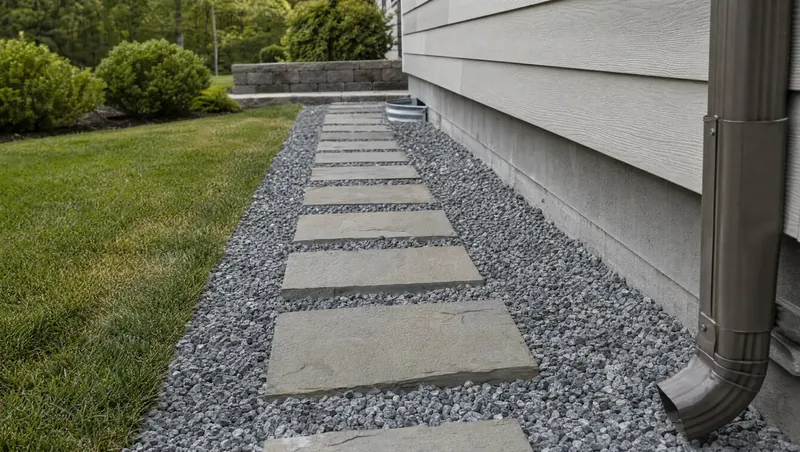
Zone 0 is the ember-resistant zone covering the first 0–5 feet around a structure — the strip where wind-blown embers do most of their damage. California directed the Board of Forestry to write a Zone 0 regulation back in 2020, and Governor Newsom ordered it finished by the end of 2025. That deadline passed without a final rule. On August 19, 2026 the Board approved the final Zone 0 regulations — first in the nation. They are still not enforceable, and the path stalled: the package went to the Office of Administrative Law as an emergency rulemaking on August 28, 2026 and was withdrawn from that review on September 8, 2026. It has not been resubmitted, and no new timeline has been announced, so there is no Zone 0 effective date right now. Insurers already reward the work.
The first 5 feet, side view
Embers land against the house first. The rule the Board approved splits this strip in two.
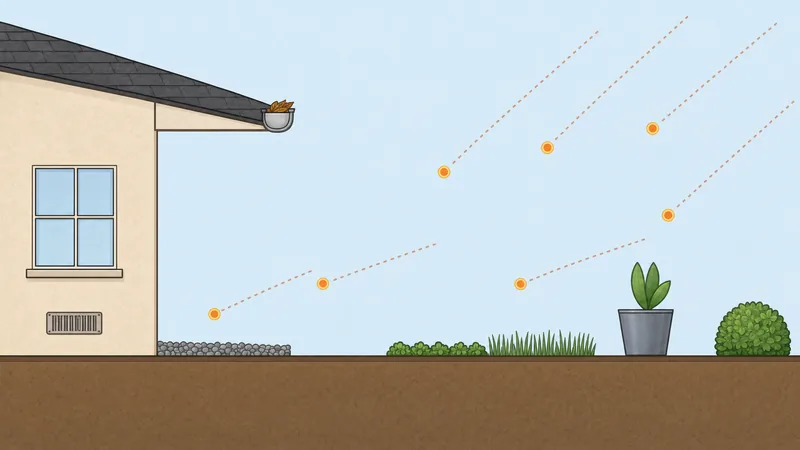
- Safety zone · non-combustibleAs deep as your eaves: one-foot eaves mean a one-foot safety zone. Minimum of 1 foot.
- Low-combustibility band · out to 5 ftLow ground covers, lawn, potted plants in noncombustible containers.
- 2 ft clearNo vegetation within 2 feet of windows, doors, posts and vents.
- Roofs and gutters countNo dead leaves — Zone 0 includes roofs and gutters.
Is Zone 0 the law? Not yet.
- AB 3074 directs the Board of Forestry to write Zone 0 rules
- Executive Order N-18-25: adopt by December 31, 2025
- Deadline passed without a final rule
- Board approves the final Zone 0 regulations
- Sent to the Office of Administrative Law as an emergency rulemaking
- Withdrawn from that review
- No effective date Not enforceable yet Not resubmitted as of September 17, 2026
What goes, what can stay, what replaces it
Out
Anywhere in the first 5 feet
- Bark mulch and wood chips
- Dead leaves — also on roofs and in gutters
- Firewood
- Dead and dying vegetation
- New combustible fencing and gates
- Anything flammable under a deck
Allowed with conditions
Outside the safety zone, well maintained
- Herbaceous plants and flowers in spaced groupings
- Low ground covers — moss, creeping thyme
- Maintained grass or lawn
- Potted plants in movable noncombustible containers
In
The replacements the rule describes
- Gravel or decomposed granite
- Pavers
- Concrete
- Metal or other noncombustible fencing and gates
- Noncombustible planters
- TreesAllowed, but maintained: branches ten feet from chimneys, trimmed five feet above roofs. Do not plant new trees in Zone 0.
- Sheds and outbuildingsInside Zone 0: noncombustible exterior roofs and walls.
- Fence that attaches to the houseA 5-foot noncombustible section is required, in Phase 2.
If a rule takes effect: what's due when
The phase-in the Board approved. It can still change before any version becomes enforceable.
Dashed: up to five years, on a timeline set by your local fire agency.
Not mandatory yet — insurers already reward it Safer from Wildfires counts the 5-foot ember-resistant zone; the California FAIR Plan offers its own mitigation discounts. Insurance discounts guideZone 0 nests inside the 100-foot defensible space
- Zone 0 · 0–5 ftNear-total removal of combustible material. The innermost 5 feet of Zone 1.
- Zone 1 · 0–30 ftSpacing between plants, canopy clearance
- Zone 2 · 30–100 ftFuel and vegetation reduction
- Not to scale · PRC 4291
Where Zone 0 came from
Most homes destroyed in wildfires don't burn because a wall of flame reaches them — they ignite from embers that blow in ahead of the fire and land on or against the house itself. CAL FIRE and the Insurance Institute for Business & Home Safety (IBHS) both point to ember exposure, not direct flame contact, as the dominant cause of home loss in wildfire-urban-interface fires. The area with the highest concentration of ember-caused ignitions is the ground immediately touching the structure — vents, siding, decks, and anything combustible piled against the wall.
AB 3074 (2020) responded to that science by amending Public Resources Code 4291 (the existing 100-foot defensible space law) to add a new, stricter sub-zone: 0–5 feet from the structure, to be defined by regulations from the Board of Forestry and Fire Protection. SB 504 (2024) amended the same law a second time, broadening where the 100-foot defensible space requirement applies and refining the Zone 0 mandate the Board wrote these rules under. A third statute, AB 1455 (2025), signed October 13, 2025 as an urgency measure, goes further: it requires the Board to adopt the Zone 0 regulations, and if the regular rulemaking process would miss the Executive Order deadline, to adopt them as emergency regulations — a fast-track path that skips the usual public-comment cycle. In practice this means Zone 0 could become enforceable on much shorter notice than a normal rulemaking timeline would suggest.
Current regulatory status (as of September 2026)
This is the part that keeps changing, so here's exactly where things stand. In February 2025, Governor Newsom's Executive Order N-18-25 directed the Board of Forestry to adopt Zone 0 regulations by December 31, 2025. That deadline passed with no final rule adopted — the Board's advisory committee cited affordability and feasibility concerns and paused work into early 2026.
The Board's Zone 0 subcommittee released an updated draft of the proposed rule text in April 2026, and on June 16, 2026 the Board's Zone Zero Regulatory Advisory Committee voted unanimously to forward the draft regulation to the full Board. A revised July 2026 draft was discussed at a July 23, 2026 workshop, and in August 2026 the Board published the final package for the vote — an August 2026 rule plead and summary, a decision memo, and the meeting agenda.
On August 19, 2026 the full Board approved the final Zone 0 defensible space regulations — the first such standard in the country. The rule is not enforceable yet. In the Board's own words: "Before becoming law, the adopted regulation package will be submitted to the Office of Administrative Law for review before being officially approved and published by the California Secretary of State. During this review, a five-day public comment period will be provided." That submission happened on August 28, 2026, as file 2026-0828-03E, "Zone 0 Defensible Space", filed as an emergency rulemaking — the AB 1455 fast-track path. It did not clear review. OAL's register of recent actions on emergency filings records the package as "Withdrawn, September 8, 2026", and as of September 17, 2026 it appears in neither of OAL's under-review registers. The Board has not published an explanation for the withdrawal or a revised timeline. The agenda posted September 11 for the Board's September 22–24 meeting in Jamestown listed four rulemaking items, none of them Zone 0 or defensible space; that agenda is now past, not the agenda for the Board's next meeting. So no Zone 0 effective date exists right now, and the published September agenda did not set one. The Board's own Zone 0 page carries no date either: as of September 17, 2026 it says only that "The Board and Board staff continue to work with the Office of Administrative Law on a final review of the Zone 0 Regulations Rule Package. We will update this page when this review is complete and when the California Secretary of State publishes the final regulation." The page also links a "Zone Zero Guidance Document September 2026." That is a statement of work in progress, not a filing: it names no date, and OAL's registers above still show no pending Zone 0 package. Track both. The approved rule's implementation approach was phased:
- Already required today (not part of the phase-in): removing dead or dying vegetation and keeping branches cleared above roofs and away from chimneys are existing defensible space law — the Board's July 2026 clarification memo confirms these must be complied with immediately, not on the phased timeline.
- New construction: compliance would be required upon approval of the regulation by the California Secretary of State.
- Phase 1 (within three years of the effective date, for existing homes): the Board's notice lists small flammable vegetative materials (mulch, bark, wood chips, dead leaves) in the first 5 feet, the area under decks, firewood storage, and keeping trees free of ladder fuels — with live branches at least one foot from walls and five feet above the roof.
- Phase 2 (three years, or up to five on a timeline set by your local fire agency): creating the under-eave safety zone, vegetation maintenance, fence and gate requirements, and outbuilding requirements — in practice, replacing combustible gates and adjusting sheds and fencing.
The Board has said implementation will prioritize education and outreach rather than penalties. The regulation also lets local communities adopt alternative approaches that achieve equivalent fire safety outcomes, or stricter standards than the state baseline, with approval by the local jurisdiction — so check with your city or county fire agency for what applies where you live. Because the package was withdrawn from Office of Administrative Law review on September 8, 2026, every date and detail above can still change before any version of this rule becomes enforceable; check the Board's page before treating any specific date as locked in.
What the approved rule removes from the first 5 feet — and what can stay
The approved regulation splits Zone 0 into two nested areas: a non-combustible immediate "safety zone" right against the house and under the eaves, and a low-combustibility band out to the full 5 feet. The safety zone flexes with your eaves — one-foot eaves mean a one-foot safety zone, two-foot eaves mean two feet — with a minimum of 1 foot where eaves are shallow, no vegetation within 2 feet of windows, doors, posts and vents, and none within 5 feet of attached decks, stairs and pergolas. In broad terms:
- Out: combustible materials — bark mulch, dead leaves, wood chips, firewood — anywhere in Zone 0, including on roofs and in gutters; dead and dying vegetation; new combustible fencing, gates, arbors, or trellises (repairs to existing fences are permitted — where a fence attaches to the house, a 5-foot noncombustible section is required, to be completed in Phase 2); anything flammable stored under a deck.
- Allowed with conditions: outside the safety zone, well-maintained herbaceous plants and flowers in spaced groupings (bulbs, poppies, petunias, succulents), low ground covers such as moss, beach strawberry and creeping thyme, maintained grass or lawn, and potted plants in easily movable noncombustible containers.
- In (recommended replacements): gravel, pavers, concrete, or decomposed granite as ground cover; metal or other noncombustible fencing and gates near the structure; noncombustible planters.
- Trees: allowed, but maintained — branches ten feet from chimneys (existing statute), trimmed five feet above roofs and clear of the eaves, with dead wood and ladder fuels removed (limbs off the bottom six feet on large trees, the lower third on smaller ones).
- Sheds and outbuildings: anything inside Zone 0 must have noncombustible exterior roofs and walls.
- New plantings: do not plant new trees in Zone 0 — and unlike most of this list, that one is not waiting on the Zone 0 rule. The Board's September 2026 guidance document says "planting new trees in Zone 0 is not allowed" because "the California Wildland-Urban Interface Code (2025) requires that the location of new trees be planned so that the canopy does not fall within ten feet of a building or structure," which it calls "current state regulation outside of the Board's jurisdiction." Existing trees are handled through clearance and maintenance requirements — neither the code nor the adopted rule demands their removal.
These specifics come from the rule package the Board approved on August 19, 2026. That package was withdrawn from Office of Administrative Law review on September 8, 2026 (file 2026-0828-03E) and has not been resubmitted, so treat this as "what the adopted rule said" rather than a requirement you can already be cited for — and expect the details to move if an amended package comes back. Two exceptions run the other way: the items flagged above as already required today, and the limit on planting new trees, which the Board attributes to the California Wildland-Urban Interface Code rather than to the Zone 0 package.
How Zone 0 fits with the 30-ft and 100-ft zones
Zone 0 doesn't replace the defensible space law you may already know — it nests inside it. Under PRC 4291, homes in State Responsibility Area or Local Responsibility Area land within a Very High Fire Hazard Severity Zone must maintain 100 feet of defensible space, split into Zone 1 (0–30 feet: spacing between plants, canopy clearance) and Zone 2 (30–100 feet: fuel and vegetation reduction). Zone 0 carves out the innermost 5 feet of Zone 1 for a much stricter standard, because spacing alone doesn't stop an ember that lands directly against the wall.
Practical steps to get ahead of it
Even before Zone 0 is final law, the work holds up on its own — it's one of the highest-leverage retrofits for reducing ignition risk, and it overlaps heavily with routine defensible space maintenance. Typical steps:
- Swap combustible mulch and bark for gravel, pavers, or decomposed granite in the 5 feet closest to the house.
- Replace or set back wood fencing and gates that attach directly to the structure.
- Move firewood, lumber, propane tanks, and trash/recycling bins outside the 5-foot strip.
- Clear anything combustible from under and on top of decks within that zone.
- Remove dead or dying plants and keep any remaining ground cover low and irrigated.
Contractors listed under defensible space clearing handle the vegetation and fuel-reduction side; the fencing, decking, and hardscape swaps fall under home hardening. Many contractors in this directory do both.
The insurance angle
Zone 0 doesn't need to be mandatory for it to pay off. California's Safer from Wildfires regulation requires insurers to factor wildfire mitigation into their pricing, and the 5-foot ember-resistant zone is one of the actions insurers are directed to recognize. The California FAIR Plan separately offers wildfire mitigation discounts for qualifying home hardening work. See our insurance discounts guide for how to document completed work so it actually shows up as savings.
FAQ
5
Is Zone 0 the law right now in California?
No — and it moved further away in September 2026, not closer. AB 3074 (2020) directed the Board of Forestry and Fire Protection to write Zone 0 rules, and Governor Newsom's Executive Order N-18-25 ordered the Board to adopt them by December 31, 2025. That deadline passed without adoption. On August 19, 2026 the full Board approved the final Zone 0 defensible space regulations, and on August 28, 2026 the package was submitted to the Office of Administrative Law as an emergency rulemaking, file 2026-0828-03E. It did not clear that review: OAL's register of recent actions on emergency filings records the package as "Withdrawn, September 8, 2026." As of September 17, 2026 it has not been resubmitted — it appears in neither of OAL's under-review registers. The Board has not published an explanation for the withdrawal or a new timeline, and the agenda posted September 11 for the Board's September 22–24, 2026 meeting listed no Zone 0 item; that agenda date is now past. As of September 17, 2026 the Board's own Zone 0 page says only that "The Board and Board staff continue to work with the Office of Administrative Law on a final review of the Zone 0 Regulations Rule Package" and that it will be updated when that review is complete. So there is currently no statewide Zone 0 effective date, and nothing in Zone 0 is enforceable as a standalone requirement today.
Which homes will Zone 0 apply to?
Under the regulation the Board approved on August 19, 2026, the rule applies "to homes only in the State Responsibility Area (SRA) and Very High Fire Hazard Severity Zones in Local Responsibility Areas (LRA)." For new construction, compliance would be required upon approval of the regulation by the California Secretary of State; existing homes would get a phased timeline (see below). Treat all of this as the shape of the rule the Board adopted, not as settled law: that package was withdrawn from OAL review on September 8, 2026, and the scope and timing could change if it is resubmitted in amended form.
What's the difference between Zone 0 and the 30/100-foot defensible space zones?
PRC 4291 already requires 100 feet of defensible space around structures in SRA/VHFHSZ areas, broken into Zone 1 (0–30 ft, spacing and clearance) and Zone 2 (30–100 ft, fuel reduction). Zone 0 is a new, stricter sub-zone nested inside Zone 1 — the first 0–5 feet — where the standard is near-total removal of combustible material, not just spacing, because that strip is where wind-blown embers land and ignite structures.
Do I need to do Zone 0 work now, before it becomes law?
It isn't mandatory yet, but insurers already reward it. California's Safer from Wildfires framework requires insurance companies to factor mitigation into pricing, and the 5-foot ember-resistant zone is one of the recognized actions — and the California FAIR Plan offers its own wildfire mitigation discounts for home hardening. Doing the work early also means you won't scramble once a compliance deadline is set.
What has to leave the first 5 feet around my house?
Under the approved rule: combustible mulch, bark, wood chips, dead leaves and firewood anywhere in the first 5 feet — including on roofs and in gutters — plus dead and dying vegetation; new combustible fencing or gates (repairs to existing fences are permitted, but where a fence attaches to the house a 5-foot noncombustible section is required, to be completed in Phase 2); and anything flammable under or on top of a deck. Well-maintained herbaceous plants, low ground covers, lawn, and potted plants in easily movable noncombustible containers are allowed outside the immediate safety zone. Hardscape (gravel, pavers, concrete, decomposed granite) and noncombustible containers are the replacements the rule describes.
Sources 10
- AB 3074 (2020) leginfo.legislature.ca.gov
- Public Resources Code 4291 leginfo.legislature.ca.gov
- Board of Forestry and Fire Protection bof.fire.ca.gov
- SB 504 (2024) leginfo.legislature.ca.gov
- AB 1455 (2025) leginfo.legislature.ca.gov
- Executive Order N-18-25 gov.ca.gov
- approved the final Zone 0 defensible space regulations bof.fire.ca.gov
- register of recent actions on emergency filings oal.ca.gov
- under-review registers oal.ca.gov
- Safer from Wildfires insurance.ca.gov
Ready to make the first 5 feet ember-resistant? Find contractors in your county
- Alameda44
- Alpine3
- Amador16
- Butte60
- Calaveras23
- Colusa4
- Contra Costa52
- Del Norte1
- El Dorado75
- Fresno16
- Glenn7
- Humboldt15
- Imperial5
- Inyo4
- Kern19
- Kings4
- Lake18
- Lassen7
- Los Angeles282
- Madera10
- Marin75
- Mariposa4
- Mendocino34
- Merced9
- Modoc3
- Mono5
- Monterey24
- Napa44
- Nevada97
- Orange49
- Placer86
- Plumas11
- Riverside64
- Sacramento41
- San Benito6
- San Bernardino41
- San Diego67
- San Francisco9
- San Joaquin18
- San Luis Obispo16
- San Mateo32
- Santa Barbara30
- Santa Clara49
- Santa Cruz33
- Shasta41
- Sierra5
- Siskiyou10
- Solano13
- Sonoma107
- Stanislaus16
- Sutter7
- Tehama21
- Trinity5
- Tulare17
- Tuolumne19
- Ventura34
- Yolo12
- Yuba12
 Insurance discounts
  Defensible space inspections
  New laws in 2026
  Wildfire Prepared Home