- Home
- Home Hardening
Home Hardening in California: What It Includes, Laws & Costs (2026)
Do you need a licensed contractor for this?
Yes, always
Roof, vent, siding, window and deck retrofits are construction work — hire a licensed contractor.
Look for a B General Building license or a specialty class such as C‑39 Roofing or C‑17 Glazing; many jobs also need a building permit.
Details and sources
We list home hardening only for contractors with a clear CSLB license.
Pick your county
- Lower
- Moderate
- Highest
All 58 counties
- Alameda8
- Alpine1
- Amador1
- Butte6
- Calaveras1
- Colusa1
- Contra Costa4
- Del Norte1
- El Dorado13
- Fresno0
- Glenn1
- Humboldt2
- Imperial1
- Inyo1
- Kern1
- Kings0
- Lake2
- Lassen1
- Los Angeles22
- Madera0
- Marin16
- Mariposa0
- Mendocino4
- Merced0
- Modoc1
- Mono1
- Monterey3
- Napa12
- Nevada10
- Orange6
- Placer10
- Plumas2
- Riverside2
- Sacramento5
- San Benito2
- San Bernardino0
- San Diego6
- San Francisco3
- San Joaquin1
- San Luis Obispo0
- San Mateo6
- Santa Barbara5
- Santa Clara7
- Santa Cruz8
- Shasta6
- Sierra1
- Siskiyou3
- Solano2
- Sonoma16
- Stanislaus1
- Sutter2
- Tehama4
- Trinity1
- Tulare1
- Tuolumne0
- Ventura8
- Yolo2
- Yuba2
What the work includes
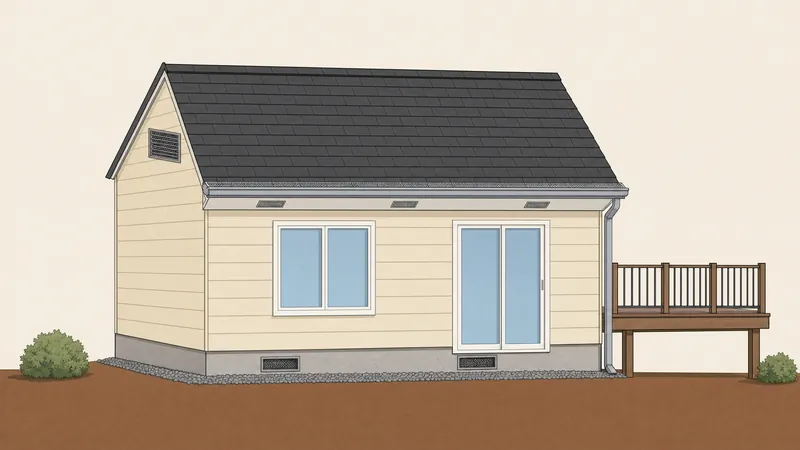
- Ember-resistant vent retrofits (attic, crawlspace, eave vents)
- Class A fire-rated roof replacement
- Gutter guards and metal flashing
- Enclosing open eaves and boxing exposed rafters
- Deck, siding and window upgrades to ignition-resistant materials
Illustration, not to scale
What it costs
- $53–$421installed, per vent
- $10,000 and upClass A roof replacement or a full structural retrofit
Vents: 2024 retrofit study
- Vents and gutters first
- Roof at end of life
- Keep receipts for insurance documentation
What the law requires
- Zone 0 0–5 ft The first 5 feet around structures would have to be ember-resistant Still in rulemaking Zone 0
- FAIR Plan Up to 16.4% Dwelling-fire discount for completed hardening, since November 2025
- Safer from Wildfires Insurers California insurers must account for hardening measures in pricing
Home hardening: laws and costs
Home hardening means retrofitting the structure itself — roof, vents, gutters, eaves, decks, windows — so wind-blown embers cannot ignite it. Embers, not the flame front, destroy most homes lost in California wildfires, and hardening is what insurers now reward.
California laws that require it
Pending Zone 0 regulations — still in state rulemaking — would require the first 5 feet around structures on all State Responsibility Area land, plus locally designated Very High Fire Hazard Severity Zones on local responsibility land, to be ember-resistant. On the insurance side, the Safer from Wildfires framework requires California insurers to account for hardening measures in pricing, and the California FAIR Plan offers up to a 16.4% dwelling-fire discount for completed hardening (since November 2025).
Related guides: AB-38 at home sale · Defensible space inspections · Zone 0 · Wildfire Prepared Home · 2026 wildfire laws
What it costs
The range is wide because the scope is: individual upgrades like ember-resistant vent retrofits run roughly $53 to $421 per vent installed, per the 2024 Headwaters Economics / CAL FIRE retrofit cost study, while a Class A roof replacement or a full structural retrofit runs $10,000 and up. Many homeowners sequence the work — vents and gutters first, roof at end of life — and keep receipts for insurance documentation.
Product guides: ember-resistant vents · Class A roofs · fire-resistant siding · fire-resistant windows