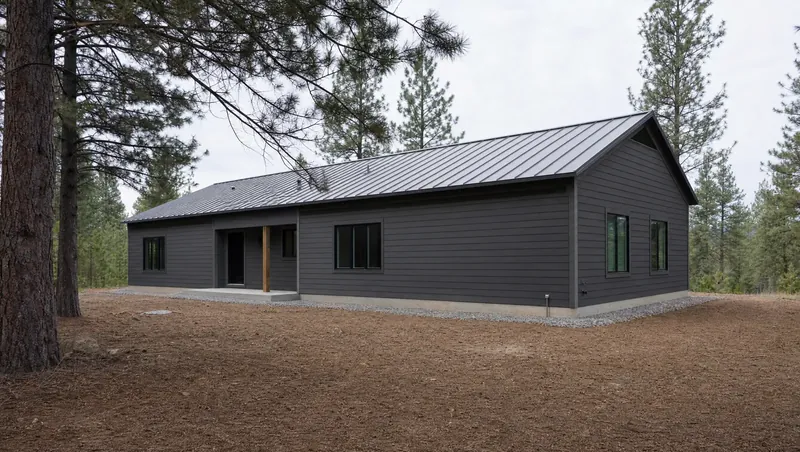
In short
Wildfire Prepared Home is a voluntary designation from the Insurance Institute for Business & Home Safety (IBHS), an independent nonprofit research organization funded by the insurance industry. It costs a $125 non-refundable application fee plus whatever mitigation work your home needs, is verified by a third-party evaluator, and lasts three years. It is not law and does not replace California's defensible space requirements — its value is a uniform, verifiable standard insurers recognize.
The designation in one card
IBHS · voluntary designation
Wildfire Prepared Home
- Base = Essential
- Plus = Enhanced
- Application fee
- $125non-refundable · both levels
- Valid for
- 3 yearswith 2 annual reviews
- Belongs to
- The propertynot the owner
- Available in
- 14 statesincluding California
- Legal status
- Voluntarynot law · does not replace PRC 4291
What your home needs
Plus contains all of Base. No partial credit — “partial mitigation does not qualify.”
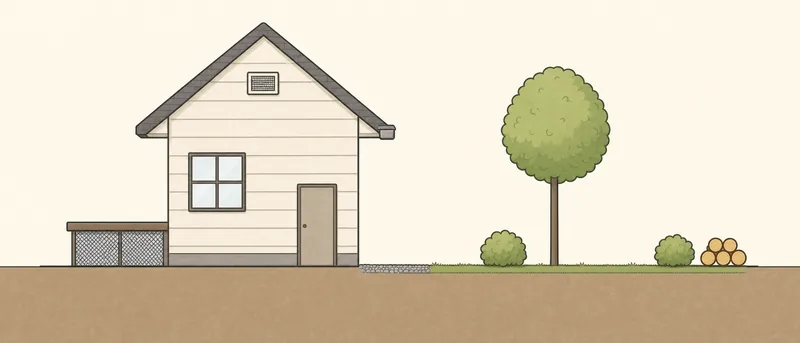
Base (Essential) protects from wind-blown embers
Most existing homes can be retrofitted to this level
- Class A roofASTM E108 or UL 790 · no wood roofing of any kind
- Noncombustible gutterse.g. metal · kept clear of debris
- Vents1/8-inch mesh or ASTM E2886 vents · no turbine vents
- 6 inches at the wall baseNoncombustible, on every exterior wall
- 0–5 ft: bare mineral soilNo plants, mulch or turf — no exceptions
- 5–30 ft: thinnedLimbs 6 ft up · shrubs 2× height apart · grass below 4 inches
- Low deck enclosed1/8-inch mesh to the ground · bare soil beneath
- Wood piles & propaneAt least 30 feet away (propane: 10 feet with clearance)
- Sheds & ADUsAt least 10 feet away · no more than 3 within 30 feet
Plus (Enhanced) adds + flames & radiant heat
Often achieved during new construction or major exterior renovations
- Gutter coversNoncombustible, on top of Base gutters
- Enclosed eavesSoffited with fiber-cement, stucco or metal
- Noncombustible sidingNo vinyl or wood siding, even treated
- Windows2 tempered panes, 20-minute rated glass, or glass block
- DoorsNoncombustible, 1¾-inch solid core, or 20-minute rated
- Deck walking surfaceSolid noncombustible, no gaps
- No back-to-back fencesCombustible fences closer than 5 feet apart
- Sheds & ADUs at 30 ftFootprint 15 square feet or more
What it costs
Paid to IBHS
- Applicationboth levels · third-party evaluation included$125
- Annual Review feeat the 1-year and 2-year anniversariesnot published
- Late feefiled after the anniversary datenot published
- Transfer feewhen the property is soldnot published
- Closed for inactivityapply againnew fee
Non-refundable. Paying it does not guarantee a designation.
The real cost is the work
New $500,000 home in Altadena — roughly how much more than standard construction:
“Only 2-3% more for wildfire-resistant materials at time of new construction”CDI, citing Headwaters Economics / IBHS, October 2025
Retrofitting an existing home depends on what already complies.
The insurance payoff in California
vs. previous construction · California Department of Insurance, March 2026
CSAA (AAA) Home Hardening Discount
The only California carrier publishing numbers for the designation
Essential (Base)
- Older HO-3 policies 1.0%
- HO-3 effective 8/1/26 5.0%
Enhanced (Plus)
- Older HO-3 policies 2.0%
- HO-3 effective 8/1/26 10.0%
With the designation, no CSAA inspection form needed
- Mercury May be eligible for a discount on the Catastrophe Fire portion of the premium No % published
- State Farm Premium discount — and some homes not eligible for coverage may become eligible No California % published
- California FAIR Plan Not a designation discount — but the overlapping work can earn up to 16.4% off the wildfire portion of a dwelling fire premium Claimed measure by measure
- Largest insurers Some of California's largest insurers now commit to writing policies for homes meeting the standard — the Department does not name them
Confirm the number with your own carrier before paying the $125.
From work to certificate
- Step 1 Finish the work First All required actions for your level — before applying
- Step 2 Pay $125 + send photos 2–5 business days IBHS eligibility photo review
- Step 3 In-person evaluation 1–3 weeks to schedule, after eligibility approval
- Step 4 Final audit 2–5 business days after the evaluation
- Step 5 Certificate Issued for the property
- Overall: several weeks to a few months
- Change Requests: up to 60 days to respond
- No expedited scheduling
- No evaluations under snow cover
- Evaluators document — they don't give advice
Three years, two check-ins
- StartCertificateActive status
- 1-year anniversaryAnnual ReviewPhotos + non-refundable fee
- 2-year anniversaryAnnual ReviewPhotos + non-refundable fee
- End of 3 yearsExpiresFull designation process again
Not the same as a defensible space inspection
Defensible space inspection
- Legal status
- Required by law · PRC 4291
- Who checks
- CAL FIRE or a local fire agency
- Covers
- 100 feet of vegetation
- Ends with
- Compliance or a correction notice
Wildfire Prepared Home
- Legal status
- Voluntary designation
- Who checks
- Third-party evaluator + IBHS audit
- Covers
- Vegetation to 30 feet + the building itself
- Ends with
- A three-year certificate for your insurer
They stack. The standard requires meeting all state and local WUI building codes — it sits on top of the law, not instead of it.
Do it yourself or hire out?
Realistically DIY
- Clean the roof and gutters
- Clear 0–5 ft to bare mineral soil
- Swap mulch for gravel
- Move wood piles and propane
- Cut annual grasses below 4 inches
- Clear under decks
Realistically a contractor
- Tree pruning and shrub spacing
- Vent retrofits: 1/8-inch mesh or ASTM E2886
- Class A roofing
- 6-inch noncombustible wall base (full siding at Plus)
- Replace combustible fencing within 5 feet
- Deck mesh and noncombustible deck surfaces
- Hardscape in the 0–5 foot zone
- Plus: windows, doors, moving accessory structures
IBHS allows either — and does not endorse specific contractors. Find contractors
What Wildfire Prepared Home is
Wildfire Prepared Home is, in the program's own words, "a voluntary designation program developed by the Insurance Institute for Business & Home Safety (IBHS)" — an independent nonprofit research organization funded by the insurance industry. No government agency runs it and no statute requires it.
- It does not replace PRC 4291. The technical standard requires the home to be designed, built, and sited to meet all applicable state and local wildland-urban interface building codes. California's legal defensible space obligations stand on their own — see defensible space inspections.
- Available in 14 states, including California. The program lists AZ, CA, CO, FL, ID, MT, NV, NM, OK, OR, UT, TX, WA and WY.
- The designation attaches to the property, not the owner. IBHS states the designation "is tied to the property, not the individual homeowner."
- Homes under active construction are not eligible for designation.
A note on naming: IBHS is renaming the two levels. Base becomes Essential and Plus becomes Enhanced. Per the program FAQ, "the designation requirements and levels of protection are not changing—only the names," and both sets of names appear across program materials during the transition. This page uses both.
The two levels: Base (Essential) and Plus (Enhanced)
- Base (Essential) focuses on protection from wind-blown embers. IBHS says most existing homes can be retrofitted to achieve this level.
- Plus (Enhanced) builds on Base by adding protections against flames and radiant heat, and IBHS notes it "is often achieved during new construction or major exterior renovations."
- Plus contains all of Base. Per the program: "To achieve the Plus (Enhanced) level, you must first meet all Base (Essential) requirements and complete the additional Plus requirements."
- There is no partial credit. "Wildfire exploits the weakest link — partial mitigation does not qualify." You must complete and maintain every required action for your chosen level.
Requirements
The requirements below come from the Wildfire Prepared Home Technical Standard, version December 2025. This is a summary of the load-bearing items, not the full standard — read the PDF before scoping work.
Base (Essential)
- Class A roof. The roof covering must have a Class A rating tested to ASTM E108 or UL 790 — fiberglass composition asphalt shingles, concrete and clay tiles, metal shingles or sheets, slate. Wood roofing is barred outright: "the use of wood shake, wood shingle, or any wood roof covering material regardless of test rating are not permitted."
- Noncombustible gutters, kept clean. Gutters and downspouts must be noncombustible (e.g., metal) and maintained clear of vegetative debris. Note that gutter covers are a Plus requirement, not a Base one.
- Vents. Either the prescriptive option — noncombustible, corrosion-resistant mesh with openings no larger than 1/8-inch — or the performance option, corrosion-resistant vents conforming to ASTM E2886. Turbine (whirlybird) vents are not allowed.
- 6 inches of noncombustible material at the base of every exterior wall, measured from the ground at grade and from the nearest horizontal surface such as a deck or patio (exposed concrete foundation, fiber-cement, brick or stone veneer, stucco, metal flashing).
- 0–5 feet: bare mineral soil, no exceptions. Remove all vegetation — grass, weeds, flowers, succulents, cacti, plants, shrubs, bushes, vegetative debris — within 5 feet to bare mineral soil; remove all combustible groundcover including wood and rubber mulch, artificial turf and exposed weed cloth; remove or replace combustible fencing, posts, gates, and retaining walls in that strip with noncombustible material. The FAQ is explicit: "There are no exceptions, even if plants are irrigated or classified as fire-resistant." See Zone 0 for how this compares to California's pending rule.
- 5–30 feet. Prune tree limbs to at least 6 vertical feet above the ground, or one-third of tree height for trees under 18 feet. Space shrubs and shrub groupings at 2 times the height of the tallest plant, up to a maximum of 10 feet. Cut annual grasses below 4 inches. Keep wood piles at least 30 feet from the building unless stored in an accessory structure; fire-retardant tarps are not permitted.
- Decks. Low decks must have the under-deck area fully enclosed with noncombustible, corrosion-resistant mesh with openings no larger than 1/8-inch, from the walking surface to the ground. Under the deck: all vegetation and combustible groundcover removed to bare mineral soil.
- Accessory structures. At least 10 feet from the building and its attachments, and no more than 3 total ADUs and accessory structures within 30 feet.
- Propane. At least 30 feet from the building, or at least 10 feet with the specified minimum clearance around the tank.
What Plus (Enhanced) adds
- Gutter covers — where gutters are provided, they must also be covered with a noncombustible material, in addition to the noncombustible gutters required at Base.
- Enclosed eaves — soffited with noncombustible material (fiber-cement, stucco, or metal), including outlookers, fascia boards, and decorative features.
- Fully noncombustible siding — metal, fiber-cement, masonry veneer, stucco, brick, or concrete, including external columns, beams, and decorative features. Vinyl, wood shake, wood shingle, and any other wood siding are not permitted, including ignition-resistant treatments and coatings.
- Windows and glazing — multipaned glass with at least two tempered panes, or glass with a fire-protection rating of at least 20 minutes tested to NFPA 257 or UL 9, or glass block (windows only).
- Doors — noncombustible construction, or solid-core wood at least 1¾ inches thick, or a fire-resistance rating of at least 20 minutes tested to NFPA 252, UL 10B, or UL 10C.
- Deck walking surfaces — either a fully noncombustible deck in new construction, or a retrofit with walking surfaces of solid noncombustible material (metal or light-weight concrete) with no gaps.
- No parallel combustible fencing — back-to-back combustible fences closer than 5 feet apart are not permitted.
- Accessory structures pushed to 30 feet — detached ADUs and accessory structures with a footprint of 15 square feet or more must be at least 30 feet from the building and its attachments.
Cost
- $125 non-refundable application fee, the same for both levels. It "covers application processing, eligibility review, and program administration," and IBHS states that "payment does not guarantee a designation or an in-person evaluation."
- The third-party evaluation is included in that fee. If no qualified third-party evaluator is available in your area, you may be required to use an approved self-inspection app instead — IBHS charges no additional fee for that option.
- Recurring fees exist but are not published. The Annual Review requires paying a non-refundable fee; a late fee applies to submissions after the anniversary date; a transfer fee applies when a designated property is sold. IBHS does not publish the dollar amounts for any of the three. Budget for them without a firm number.
- Mitigation work is the real cost, and IBHS says it "vary[ies] depending on the home's condition." For new construction, the California Department of Insurance cited a $500,000 standard-construction home in Altadena needing roughly $9,000 more for IBHS Base and $15,000 more for IBHS Plus (versus $13,000 for the CA WUI Code), calling it "only 2-3% more for wildfire-resistant materials at time of new construction," citing Headwaters Economics / IBHS, October 2025. Retrofit costs on an existing home are a different question entirely and depend on what already complies.
- An application that closes for inactivity costs you the fee. "If the application closes due to inactivity, you will need to apply again and pay a new fee."
Process and timeline
The order matters: the work comes first, then the application. IBHS instructs homeowners to "complete all required actions for your selected level before applying," including the 0–5 foot noncombustible zone and all building and defensible space requirements — then apply, pay the fee, and submit clear eligibility photos demonstrating compliance.
- Complete all mitigation work for your chosen level.
- Pay the $125 non-refundable fee and submit eligibility photos for IBHS review — approximately 2–5 business days.
- If eligible, an authorized third-party evaluator verifies the property in person — scheduling typically 1–3 weeks after eligibility approval.
- Final audit review after the evaluation — approximately 2–5 business days.
- IBHS issues the designation certificate for the property.
If IBHS issues Change Requests — before or after the in-person evaluation — you have up to 60 days to respond to each. Overall, IBHS says "the process typically takes several weeks to a few months, depending on how quickly required mitigation work is completed and evaluator availability in your area." Two constraints worth planning around: expedited scheduling is not available, and evaluations cannot be done under snow cover, because "snow cover prevents proper vegetation and other defensible space assessments."
Do not expect the evaluator to coach you. Per IBHS, "the evaluator's role is to document conditions at the property and collect verification information. Evaluators do not provide wildfire mitigation advice or determine whether a home qualifies for designation."
The three-year lifecycle is not "set and forget"
- Designations are valid for three years, and two Annual Reviews are mandatory in that window — one at the 1-year anniversary and one at the 2-year anniversary — to keep the designation in Active status. Each is a photo-based maintenance verification with its own non-refundable fee.
- There is a 60-day filing window. "To maintain Active status, designated properties must apply for the Annual Review during the 60-day period leading up to the Anniversary Date... Submissions after the Anniversary Date will incur a late fee."
- Renewal is the full process again. At the end of the three years the designation expires, and "the property owner must complete the full designation process to verify continued compliance with this technical standard."
- A sale transfers the certificate to the new homeowner for a small transfer fee, since the designation follows the property.
What it does for your insurance in California
The California Department of Insurance's March 2026 wildfire safety and insurability briefing describes Wildfire Prepared Home as "aligned with Safer from Wildfires, the nation's first wildfire safety insurance discount program," says it "creates a uniform, verifiable standard insurers can recognize" and "reduces risk of non-renewal and FAIR Plan reliance," and states that "some of California's largest insurers now commit to writing policies for homes meeting the IBHS Wildfire Prepared Home standard" — without naming them. The same briefing notes the Department "now requires insurers to offer discounts which range 4%–40% for wildfire mitigation actions," with the highest discounts going to the highest-risk homes, and cites loss data of 31% fewer losses for Wildfire Prepared Home and 35% fewer for Wildfire Prepared Home Plus compared to previous construction. Paradise is cited as the first California municipality to adopt the standard in resilient rebuilding ordinances.
One precision worth having: the underlying regulation, 10 CCR §2644.9, does not mention IBHS or Wildfire Prepared Home anywhere. At the community level it names only Fire Risk Reduction Community and Firewise USA. The designation's work overlaps heavily with the twelve Safer from Wildfires measures, and the Department calls it aligned — but it is not written into the regulation.
Carrier by carrier, what is actually published:
- CSAA (AAA) — the only California carrier publishing numbers tied to the designation. Its My Home Hardening Discount lists IBHS Prepared Home (Essential) at 1.0% on older HO-3 policies and 5.0% on HO-3 policies effective 8/1/26; Plus (Enhanced) at 2.0% and 10.0% respectively. CSAA also states that "customers who obtain an IBHS Wildfire Prepared Home designation are eligible for the discount and do not need to complete the inspection form."
- Mercury — customers who earn the designation "may be eligible for a discount on the Catastrophe Fire portion of their premium." No percentage is published for the designation itself.
- State Farm — customers with a Wildfire Prepared Home or Wildfire Prepared Home Plus designation "can receive a premium discount and some properties that are not currently eligible for coverage may become eligible with a Wildfire Prepared Home designation." State Farm publishes no California percentage for it.
- California FAIR Plan — the designation itself is not a FAIR Plan discount. Its November 15, 2025 discount schedule pays for twelve specific measures, up to 16.4% off the wildfire portion of a dwelling fire premium and up to 13.8% on commercial policies. The work overlaps almost entirely with the IBHS requirements, so you can earn both — but you claim the FAIR Plan discounts measure by measure, not by showing a certificate.
Full detail on the discount landscape is in our California insurance discounts guide. If the discount is your only reason for pursuing designation, confirm the number with your own carrier before paying the $125.
Contractor or DIY?
IBHS allows either. Per the FAQ, "contractors, mitigation specialists, or consultants familiar with the program can help prepare your home," and "if you choose to do-it-yourself and miss something that will be identified during the photo review or evaluation, IBHS will provide guidance on required corrections." In the application itself you choose a DIY Service path — which IBHS says most homeowners take — or a Full-Service Option through Madronus, a partner providing mitigation guidance, project design, and coordination with vetted contractors, at additional fees managed directly by Madronus.
Realistically DIY: cleaning the roof and gutters, clearing the 0–5 foot zone to bare mineral soil, swapping mulch for gravel, moving wood piles and propane, cutting annual grasses below 4 inches, clearing under decks.
Realistically a contractor: tree pruning and shrub spacing, vent retrofits to 1/8-inch mesh or ASTM E2886 vents, Class A roofing, the 6-inch noncombustible wall base (and full noncombustible siding at Plus), replacing combustible fencing within 5 feet, deck mesh and noncombustible deck surfaces, hardscape in the 0–5 foot zone, and — at Plus — windows, doors, and relocating accessory structures.
IBHS does not endorse specific contractors: "at this time, IBHS does not endorse specific contractors, but we provide resource links that may help you find support in your area." That is the gap this directory fills. Structural work sits under home hardening; vegetation and fuel work under defensible space clearing.
Wildfire Prepared Home vs. a defensible space inspection
These are two different things and homeowners routinely conflate them. A defensible space inspection checks compliance with California law; a Wildfire Prepared Home evaluation checks compliance with a private standard you volunteered for.
- Legal status — PRC 4291 defensible space is required by law; Wildfire Prepared Home is a voluntary designation program.
- Who inspects — CAL FIRE or a local fire agency for defensible space; an authorized third-party evaluator plus an IBHS audit for the designation.
- Scope — defensible space covers 100 feet of vegetation around the structure; Wildfire Prepared Home covers vegetation out to 30 feet plus the building itself — roof, vents, walls, gutters, decks.
- Outcome — a defensible space inspection ends in compliance or a correction notice; the designation ends in a three-year certificate you can hand an insurer.
- They stack. The technical standard requires the home to meet all applicable state and local WUI building codes, so the designation sits on top of legal compliance rather than substituting for it.
For the legal side, see our guide to defensible space inspections.
FAQ
5
What does a Wildfire Prepared Home designation really cost?
The published fee is a $125 non-refundable application fee — the same amount for both the Base (Essential) and Plus (Enhanced) levels. It covers application processing, eligibility review, and program administration, and IBHS states plainly that paying it does not guarantee a designation or an in-person evaluation. On top of that: the mitigation work itself, which IBHS says varies with the home's condition; a separate non-refundable Annual Review fee at the one-year and two-year anniversaries; a late fee if you miss the review window; and a small transfer fee if the property is sold. IBHS does not publish the dollar amounts for the annual review, late, or transfer fees. If your application closes for inactivity, you apply again and pay a new fee.
How long does the process take?
IBHS says it typically takes several weeks to a few months, depending on how fast the mitigation work gets done and whether an evaluator is available in your area. The published stage times are: initial eligibility photo review about 2–5 business days; in-person evaluation scheduling typically 1–3 weeks after eligibility approval; final audit review after the evaluation about 2–5 business days. If IBHS issues Change Requests, you get up to 60 days to respond, both before and after the in-person evaluation. Expedited scheduling is not available, and evaluations cannot happen under snow cover because vegetation and defensible space cannot be assessed.
Does the designation get me an insurance discount in California?
Sometimes, and the amount depends on the carrier. CSAA publishes specific figures: its Home Hardening Discount gives 1.0% for an IBHS Prepared Home (Essential) designation on older HO-3 policies and 5.0% on HO-3 policies effective 8/1/26, and 2.0% / 10.0% respectively for Plus (Enhanced) — and CSAA customers with the designation do not need to complete its inspection form. Mercury says customers who earn the designation may be eligible for a discount on the Catastrophe Fire portion of their premium, without publishing a percentage. State Farm says designated properties can receive a premium discount and that some properties not currently eligible for coverage may become eligible with the designation, again without a published California figure. The California Department of Insurance said in March 2026 that some of California's largest insurers now commit to writing policies for homes meeting the standard.
Should I go for Base (Essential) or Plus (Enhanced)?
IBHS describes Base (Essential) as focused on protection from wind-blown embers and says most existing homes can be retrofitted to achieve it. Plus (Enhanced) builds on Base by adding protection against flames and radiant heat, and IBHS notes it is often achieved during new construction or major exterior renovations — it requires fully noncombustible siding, enclosed (soffited) eaves, tempered or 20-minute-rated glazing, rated doors, and noncombustible deck walking surfaces. To reach Plus you must first meet every Base requirement. Partial credit does not exist: in the words of the program FAQ, "partial mitigation does not qualify."
If I sell the house, does the new owner have to start over?
No. The designation is tied to the property, not the individual homeowner, and IBHS says the certificate may be transferred to a new homeowner for a small transfer fee. The three-year clock and the annual review obligations travel with it — the designation still expires at the end of the three-year period, and at that point the full designation process has to be completed again to verify continued compliance.
Sources 9
- Wildfire Prepared Home wildfireprepared.org
- independent nonprofit research organization funded by the insurance industry wildfireprepared.org
- Wildfire Prepared Home Technical Standard, version December 2025 wildfireprepared.org
- March 2026 wildfire safety and insurability briefing insurance.ca.gov
- 10 CCR §2644.9 law.cornell.edu
- CSAA (AAA) csaa-insurance.aaa.com
- Mercury newsroom.mercuryinsurance.com
- State Farm newsroom.statefarm.com
- November 15, 2025 discount schedule cfpnet.com
Need the retrofit work done before you apply? Find contractors in your county
- Alameda44
- Alpine3
- Amador16
- Butte60
- Calaveras23
- Colusa4
- Contra Costa52
- Del Norte1
- El Dorado75
- Fresno16
- Glenn7
- Humboldt15
- Imperial5
- Inyo4
- Kern19
- Kings4
- Lake18
- Lassen7
- Los Angeles282
- Madera10
- Marin75
- Mariposa4
- Mendocino34
- Merced9
- Modoc3
- Mono5
- Monterey24
- Napa44
- Nevada97
- Orange49
- Placer86
- Plumas11
- Riverside64
- Sacramento41
- San Benito6
- San Bernardino41
- San Diego67
- San Francisco9
- San Joaquin18
- San Luis Obispo16
- San Mateo32
- Santa Barbara30
- Santa Clara49
- Santa Cruz33
- Shasta41
- Sierra5
- Siskiyou10
- Solano13
- Sonoma107
- Stanislaus16
- Sutter7
- Tehama21
- Trinity5
- Tulare17
- Tuolumne19
- Ventura34
- Yolo12
- Yuba12
 Defensible space inspections
 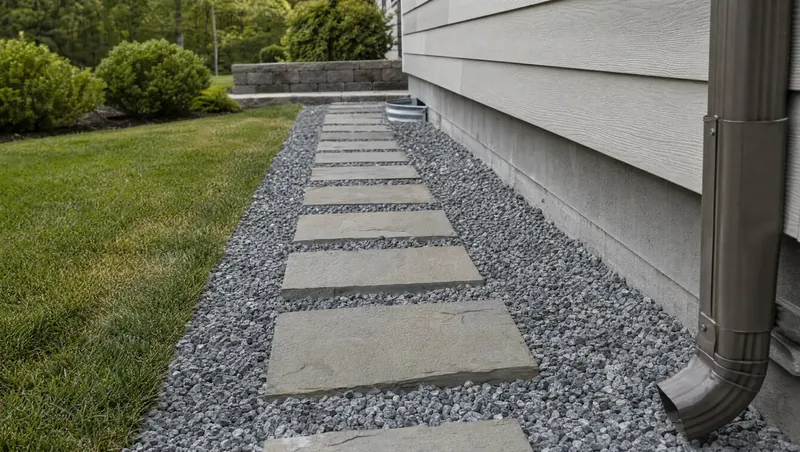 Zone 0: the first 5 feet
  Insurance discounts
  AB-38: selling a home