
In short
Selling a home in a California High or Very High Fire Hazard Severity Zone usually means three separate wildfire disclosures. The Natural Hazard Disclosure says whether the property is in a mapped fire zone. AB 38 adds a home-hardening notice for homes built before 2010 and defensible space documentation, which comes from an inspection. Only the last one can require work on the property — and if it is not done before closing, seller and buyer sign a written agreement that hands it to the buyer.
Wildfire disclosures in 60 seconds
Three wildfire disclosures, not one
“AB 38 disclosure” and “wildfire disclosure” get used as if they were the same paper. They are not. A seller in a fire zone deals with up to three documents, each from a different part of California law, each answering a different question:
| Document | What it answers | Applies to | Needs an inspection? |
|---|---|---|---|
| Natural Hazard Disclosure Statement Civil Code §1103.2 | Is the property inside a mapped fire zone (and flood, earthquake and other zones)? | Sales of single-family residential property in a mapped hazard area, any age | No — it is based on official maps |
| Home-hardening notice (AB 38) Civil Code §1102.6f | Was the house built before the wildfire building codes, and which vulnerable features does the seller know of? | High or Very High FHSZ, home built before January 1, 2010 | No — the seller discloses what they are aware of |
| Defensible space documentation (AB 38) Civil Code §1102.19 | Does the property comply with defensible space law? | High or Very High FHSZ, any age | Yes, in practice — the documentation comes from an inspection |
AB 38 (2019) is the bill that added Sections 1102.6f and 1102.19 to the Civil Code. The Natural Hazard Disclosure is older and separate. The practical side of the AB 38 inspection — who inspects, what it costs, how long it takes — is in our AB-38 guide; this page is about telling the three documents apart.
The Natural Hazard Disclosure: is the property in a mapped zone?
The Natural Hazard Disclosure Statement is a fixed form written into Civil Code §1103.2. Two of its lines are about fire:
- “A HIGH or VERY HIGH FIRE HAZARD SEVERITY ZONE (FHSZ)” — Yes or No, with three boxes for which kind: High FHSZ in a state responsibility area, Very High FHSZ in a state responsibility area, or Very High FHSZ in a local responsibility area. The form notes the owner is subject to the maintenance requirements of Government Code §51182.
- “A WILDLAND AREA THAT MAY CONTAIN SUBSTANTIAL FOREST FIRE RISKS AND HAZARDS” — the State Responsibility Area. The owner is subject to Public Resources Code §4291, and the form states it is not the state's responsibility to provide fire protection to structures in the wildlands unless CAL FIRE has a cooperative agreement with a local agency.
The underlying duties come from Government Code §51183.5 (a seller of property in a Very High FHSZ discloses that fact) and Public Resources Code §4136 (a seller of property in the State Responsibility Area discloses the wildland fire risk). Both say the disclosure goes on the Natural Hazard Disclosure Statement or the Local Option Real Estate Disclosure Statement.
No one inspects the property for this form: its representations are “based on their knowledge and maps drawn by the state and federal governments,” and the form lets the seller and agent rely on a third-party disclosure provider. Under Civil Code §1103.4, they are not liable for errors they did not personally know about if the information came from public agencies or a qualified expert's report and ordinary care was used. If a map is not accurate enough to tell whether the parcel is in a zone, §1103.2(b) says to mark “Yes” — “No” is allowed only with an attached expert report verifying the property is outside it.
Which map counts
Per the State Fire Marshal's Fire Hazard Severity Zone page, the current State Responsibility Area maps took effect April 1, 2024. Local Responsibility Area recommendations went to cities and counties in four phases between February 10 and March 24, 2025, and OSFM tells owners to contact their local jurisdiction about LRA parcels: under Government Code §51179 the local agency designates the zones by ordinance and may raise, but not lower, the State Fire Marshal's rating. A 2026 update of the SRA maps is open for public comment from November 9, 2026 through January 8, 2027.
The AB 38 home-hardening notice: what about the house?
Civil Code §1102.6f is a separate notice, “in addition to any other disclosure” in its article, and applies only when two things are true: the property is in a High or Very High FHSZ, and the home was built before January 1, 2010. The notice has a fixed opening statement that begins: “This home is located in a high or very high fire hazard severity zone and this home was built before the implementation of the Wildfire Urban Interface building codes which help to fire harden a home.”
After that statement, the notice contains:
- The low-cost retrofit list (on or after July 1, 2025) from Government Code §51189, marking which retrofits, if any, were completed while the seller owned the property.
- Six features that may make the home vulnerable to wildfire and embers — vents, wood shake roofs, combustibles within five feet, single-pane windows, bird stopping and flashing, uncovered gutters. The seller discloses which of them exist on the home, of which the seller is aware. The exact wording of all six is in our AB-38 guide.
- A final inspection report, if the seller already has one under Government Code §51182: a copy, or information on where to get it (§1102.6f(b)).
The key difference from the Natural Hazard Disclosure: this notice is about the building, not the map. And it is a disclosure, not a repair order — the statute does not require the seller to fix any feature on the list. A vent or roof contractor only comes into it if the seller chooses to retrofit before listing, which then shows up on the notice as a completed retrofit.
AB 38 defensible space documentation: is the yard compliant?
The third document is the only one that depends on an inspection. Civil Code §1102.19 requires the seller of property in a High or Very High FHSZ, of any age, to give the buyer documentation that the property complies with Public Resources Code §4291 or the local vegetation management ordinance:
- Where a local ordinance requires such documentation, the seller provides a copy that meets that ordinance, plus information on the local agency it can be obtained from.
- Where there is no such ordinance, and a state or local agency, other government entity or qualified nonprofit provides an inspection with documentation for that area, the seller provides documentation obtained in the six months before the date the seller enters into the transaction.
The State Fire Marshal's Information Bulletin 21-007 tells owners to contact their local fire department to find out whether the property requires an inspection, and notes that in the State Responsibility Area an inspection is required in both the High and the Very High zone. In the SRA without a local ordinance, the document is CAL FIRE's Notice of Defensible Space Inspection, form LE-100a. Who to call in each case, fees and wait times: AB-38 guide. What the inspector checks, zone by zone: defensible space inspection guide.
If the property does not pass: the buyer agreement
A failed or missing defensible space inspection does not block the sale. IB 21-007 gives two paths: the owner does the work listed in the inspection documentation and has the property inspected again before escrow, or the buyer agrees to bring it into compliance.
The second path is a written agreement required by §1102.19(b) whenever the seller has not obtained compliance documentation. In it, the buyer agrees to obtain the documentation:
- Under the local ordinance, where the jurisdiction has one requiring an owner or buyer to obtain it — on the ordinance's terms;
- Within one year of the close of escrow, where there is no such ordinance and an agency or qualified nonprofit provides inspections for the area.
The agreement moves the paperwork, not the law. Under §1102.19(c), nothing in the section — including an agreement between buyer and seller — limits a state or local agency's ability to enforce defensible space requirements.
Neither the Natural Hazard Disclosure nor the home-hardening notice has an equivalent “pass or fail.” A “Yes” on the fire zone line, or a disclosed wood shake roof, is information for the buyer — not something the law requires you to clear before closing.
When each one is due, and who is exempt
The AB 38 sections sit in the same article of the Civil Code as the Transfer Disclosure Statement (§§1102–1102.19); the Natural Hazard Disclosure has its own article (§§1103–1103.15). Both articles use the same delivery rule:
- Deliver as soon as practicable before transfer of title (§1102.3, §1103.3).
- Late disclosure lets the buyer walk. If a required disclosure, or a material amendment, is delivered after the buyer's offer is executed, the buyer has three days after delivery in person, or five days after delivery by mail or electronic record, to terminate the offer in writing.
- No waivers. A waiver of either article is void as against public policy (§1102(c), §1103(d)).
Both articles cover sales of single-family residential property and exempt certain transfers — among them court-ordered sales, foreclosure sales, and sales by a fiduciary administering a trust, guardianship, conservatorship or estate. Each article has its own full list: §1102.2 for the AB 38 sections and §1103.1 for the Natural Hazard Disclosure.
In practice the order matters most for the defensible space documentation, because it is the only one that needs a visit from an outside agency: request the inspection when you plan to list. The NHD report and the home-hardening notice can be prepared from maps and what you know about the house.
Zone 0 and these disclosures (status on November 17, 2026)
Zone 0 — the ember-resistant first five feet around a structure — is not yet part of any of these three documents as a legal standard. Here is what is confirmed as of November 17, 2026:
- The Board of Forestry and Fire Protection filed its Zone 0 regulations with the Office of Administrative Law as an emergency rulemaking on November 16, 2026 (file 2026-1116-02E). OAL lists the file among emergency regulations under review.
- The Board's Zone 0 page says Board staff continue to work with OAL on a final review and will update the page when the review is complete and the Secretary of State publishes the final regulation.
Until a Zone 0 regulation takes effect, there is no Zone 0 standard for an inspector to check. The home-hardening notice, separately, already asks about combustible landscaping or other materials within five feet of the home — that line has been in §1102.6f since 2021 and does not depend on the Zone 0 rulemaking. Background on what Zone 0 would require: Zone 0 guide.
FAQ
6
Is the AB 38 disclosure the same thing as the Natural Hazard Disclosure?
No. The Natural Hazard Disclosure Statement (Civil Code 1103.2) only says whether the property lies in mapped hazard areas, including a High or Very High Fire Hazard Severity Zone and the State Responsibility Area wildland area. AB 38 added two different duties for homes in a High or Very High zone: a home-hardening notice for homes built before January 1, 2010 (Civil Code 1102.6f), and documentation that the property complies with defensible space rules (Civil Code 1102.19). A seller in such a zone usually deals with all three.
My home was built after 2010. Do I still have an AB 38 obligation?
Partly. The home-hardening notice under Civil Code 1102.6f only applies to homes constructed before January 1, 2010. The defensible space documentation under Civil Code 1102.19 applies to a property in a High or Very High Fire Hazard Severity Zone regardless of when the home was built, and the Natural Hazard Disclosure still reports the zone.
Do I have to fix the vulnerable features before I sell?
Civil Code 1102.6f requires disclosure, not repair: the notice lists the features and the seller discloses which of them exist on the home, as far as the seller is aware, plus which low-cost retrofits were completed during the seller’s ownership. Defensible space is different: under Civil Code 1102.19 the seller provides compliance documentation, or seller and buyer sign a written agreement under which the buyer obtains it after closing.
Can the buyer agree to skip these disclosures?
No. Both Civil Code articles say a waiver of their requirements is void as against public policy — Section 1102(c) for the article that contains the AB 38 sections, and Section 1103(d) for the Natural Hazard Disclosure article.
The fire zone map is unclear for my parcel. What do I mark on the Natural Hazard Disclosure?
Civil Code 1103.2(b) says that if the map or accompanying information is not accurate enough for a reasonable person to tell whether the property is in the zone, the seller or agent marks “Yes.” They may mark “No” only if they attach a report prepared under Civil Code 1103.4(c) that verifies the property is not in the hazard zone.
Does Zone 0 change what I have to disclose right now?
Not as of November 17, 2026. The Board of Forestry’s Zone 0 regulations are not in effect: on November 16, 2026 the Board filed them with the Office of Administrative Law as an emergency rulemaking (file 2026-1116-02E), and OAL lists the file as under review. Separately, the existing home-hardening notice already lists combustible landscaping or other materials within five feet of the home as a feature to disclose.
Sources 18
- added Sections 1102.6f and 1102.19 to the Civil Code leginfo.legislature.ca.gov
- Natural Hazard Disclosure Statement leginfo.legislature.ca.gov
- Government Code §51183.5 leginfo.legislature.ca.gov
- Public Resources Code §4136 leginfo.legislature.ca.gov
- Civil Code §1103.4 leginfo.legislature.ca.gov
- Fire Hazard Severity Zone page osfm.fire.ca.gov
- Government Code §51179 leginfo.legislature.ca.gov
- Civil Code §1102.6f leginfo.legislature.ca.gov
- Civil Code §1102.19 leginfo.legislature.ca.gov
- Information Bulletin 21-007 34c031f8-c9fd-4018-8c5a-4159cdff6b0d-cdn-endpoint.azureedge.net
- §1102.3 leginfo.legislature.ca.gov
- §1103.3 leginfo.legislature.ca.gov
- §1102(c) leginfo.legislature.ca.gov
- §1103(d) leginfo.legislature.ca.gov
- §1102.2 leginfo.legislature.ca.gov
- §1103.1 leginfo.legislature.ca.gov
- emergency regulations under review oal.ca.gov
- Zone 0 page bof.fire.ca.gov
Get quotes for pre-sale clearance workYour town or county — free, one request
All 58 counties
- Alameda44
- Alpine3
- Amador16
- Butte61
- Calaveras24
- Colusa4
- Contra Costa52
- Del Norte1
- El Dorado74
- Fresno17
- Glenn7
- Humboldt15
- Imperial5
- Inyo4
- Kern16
- Kings4
- Lake17
- Lassen7
- Los Angeles278
- Madera10
- Marin73
- Mariposa4
- Mendocino35
- Merced8
- Modoc3
- Mono5
- Monterey25
- Napa44
- Nevada99
- Orange49
- Placer86
- Plumas11
- Riverside64
- Sacramento40
- San Benito6
- San Bernardino40
- San Diego69
- San Francisco9
- San Joaquin17
- San Luis Obispo16
- San Mateo32
- Santa Barbara30
- Santa Clara48
- Santa Cruz33
- Shasta40
- Sierra5
- Siskiyou10
- Solano15
- Sonoma103
- Stanislaus15
- Sutter7
- Tehama21
- Trinity5
- Tulare17
- Tuolumne19
- Ventura33
- Yolo12
- Yuba11
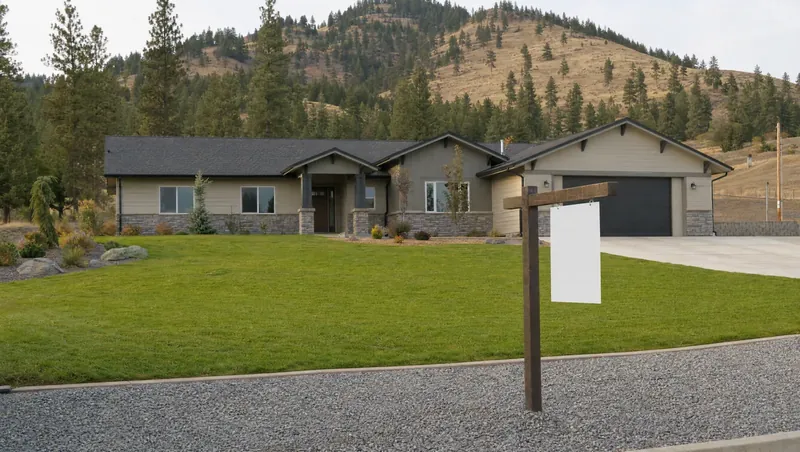 AB-38: selling a home
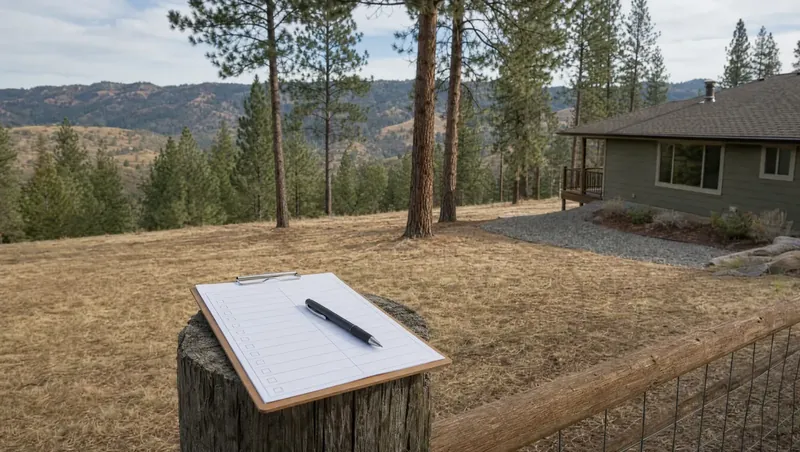 Defensible space inspections
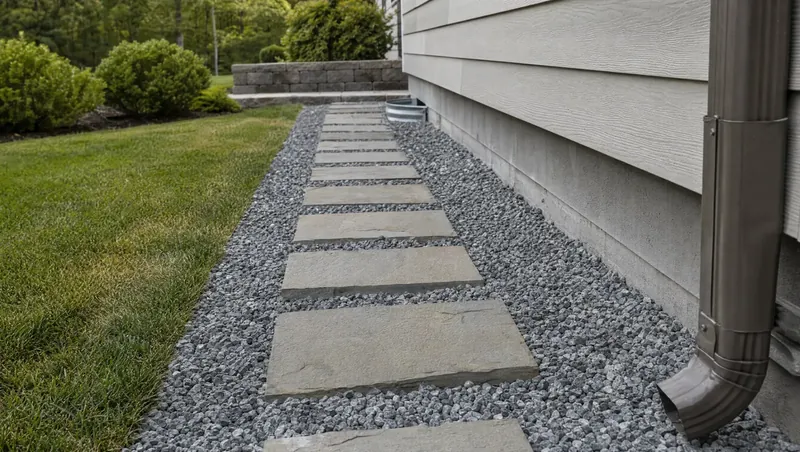 Zone 0: the first 5 feet
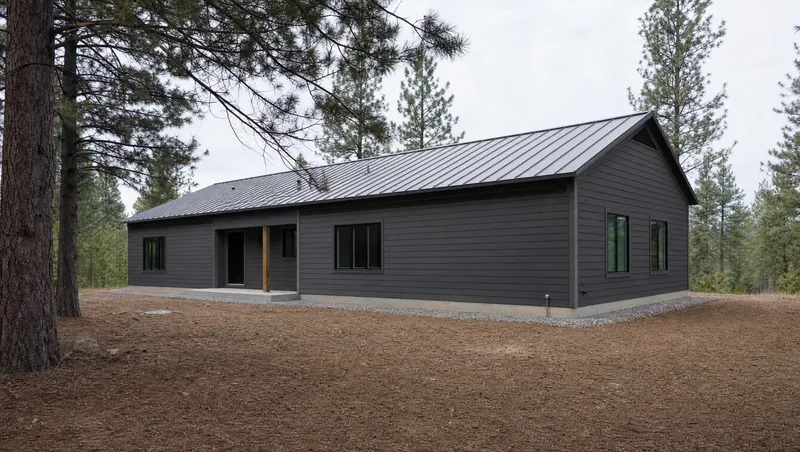 Wildfire Prepared Home